Corregidor Island
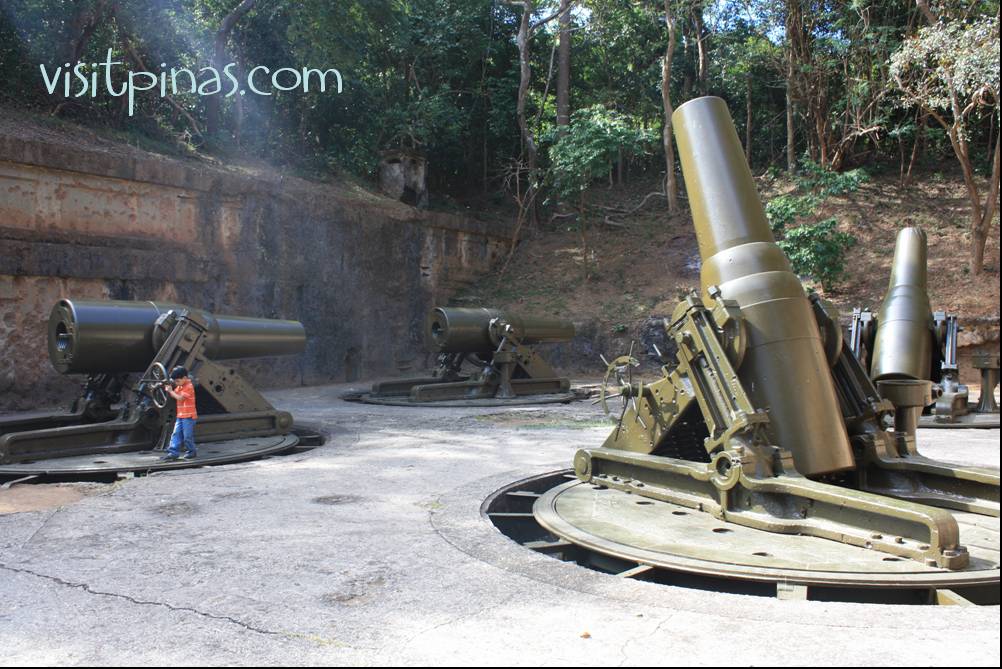 Corregidor Island is where the Filipino and American forces made a last stand against the invading Japanese forces during World War II. Corregidor is the second most bombed island, next to Malta, during World War II. The huge batteries, mortars and fortifications still stand today amidst the ruins.
After Pearl Harbor, the Japanese air attack crippled the US air force and navy stationed in the Philippines. By January 1941, the Japanese had occupied Manila and in March, Gen. Douglas MacArthur, the commanding General of the USAFFE, left for Australia. The last two bastions of defense were Bataan and Corregidor. The remaining forces in Bataan surrendered on 9 April 1942. After receiving an intense and non-stop bombardment from the Japanese forces, running low on food, water and ammunition, and with the sick/wounded filling the Malinta Tunnel, Corregidor surrendered on 6 May 1942. It was recaptured by the Allied forces in March 1945. The Pacific War Memorial now stands in Corregidor.
Corregidor is derived from the Spanish term corregir — “to correct”. The Spanish lighthouse and the marker nearby, as well as the flagpole at Topside taken from a Spanish warship, are witnesses to the fact that before Spain ceded the Philippines to the United States in 1898, after the Spanish-American War, Corregidor Island used to be a checkpoint for vessels entering Manila Bay.
Just 48 kilometers west of Manila, the whole island of Corregidor has been preserved as a historical site. It is shaped like a tadpole, it’s 3 miles long and 1 ½ miles at its widest point. The 45-minute ferry ride going to Corregidor starts at the docks near the Manila Yacht Club. It is a historical trip worth taking.
A Corregidor trip is highly recommended for history buffs. It’s better to start the tour early in the morning, with the first of two ferries leaving Manila at around 8:00 a.m. Buffet lunch is an option at the Corregidor Inn, usually part of the tour fee. There are a number of buses full of tourists and each bus has a different schedule for the Lights and Sounds Show at Malinta Tunnel. That’s 30 minutes gap between buses, which is the approximate time difference each bus would arrive for lunch. There are a number of articles at the VisitPinas Blog for more details and photos: A Tour Through History in an Island called Corregidor, Corregidor Island: History in the Ruins, and Corregidor Island: Araw ng Kagitingan.